Exploring the Timeless Appeal of an Irish Pub in NYC
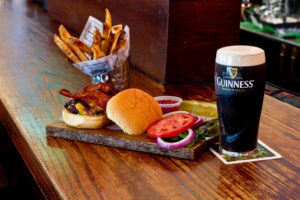
New York changes by the hour. A storefront that sold newspapers thirty years ago becomes a coffee bar, then a boutique, then a luxury lobby. Rents climb, menus stretch, neighborhoods drift from one identity to another. Yet the Irish pub remains, and not by accident. In a city that rewards novelty, the staying power of a good pub says something important about what New Yorkers still want when the day runs long and the weather turns cold.
The appeal is not just nostalgia, and it is not limited to tourists looking for a pint under a framed county crest. A real Irish pub in NYC offers something the city often rations too tightly: ease. Not cheapness, necessarily, though that matters. Not trendiness, though some pubs pick up fashionable touches whether https://jaidenjhsf380.publishlane.com/posts/a-cozy-night-out-starts-at-the-right-irish-pub-nyc-bar they want to or not. Ease means you can walk in alone, order without fuss, claim a corner stool, and feel as if the room has already decided to make space for you.
That sense of welcome is difficult to manufacture. Plenty of bars can install dark wood, hang old mirrors, and stack whiskey bottles high enough to impress a passerby. Far fewer can create the feeling that regulars and first-timers are playing by the same social rules. The best pubs understand this instinctively. They know service should be swift without being hurried. They know music should fill silence, not crush conversation. They know a bartender’s memory, someone recalling your usual pint after two visits, can be worth more than any interior design budget.
A tradition that fits New York unusually well
Irish pub culture took root in New York for obvious historical reasons, but its endurance goes beyond heritage. The city has long depended on places where people could cross paths without appointment. In older neighborhoods, the pub worked as an unofficial town square. It was where laborers got a meal after a shift, where young office workers learned their route into adulthood, where families marked baptisms, wakes, and birthdays, often in the same back room.
This mattered in immigrant communities, especially in the nineteenth and early twentieth centuries, when social institutions had to be built from the ground up. Churches offered one kind of support. Political clubs offered another. The pub often bridged the formal and the personal. It was where jobs were mentioned, rooms were found, grudges were aired, and local news moved faster than any printed page. Even now, in a city run by phones and calendars, the pub still performs a version of that role. The conversations are different, but the function remains recognizable.
What makes the Irish version particularly durable is its balance. It is social without demanding performance. It can host celebration, but it does not require one. There is a humility to the format. A pub does not need a concept. It needs reliable beer, competent food, decent acoustics, and a room that settles people rather than showing off at them.
That is one reason the phrase Irish Pub NYC still carries such immediate meaning. People hear it and picture not just a drink menu but a social environment. They expect polished wood, yes, and maybe stained glass or a brass rail. More importantly, they expect a place where time loosens a little.
The room itself does half the work
Walk into a strong pub and notice how quickly the body relaxes. The design language is familiar enough that you rarely think about it consciously. The floor is often worn in the right places. The lighting favors amber over glare. Mirrors deepen the room without making it feel theatrical. Tables are close enough to produce energy, not so close that every private word becomes a public one.
That comfort is not accidental. Good pub interiors are built around duration. Many bars in New York are designed for turnover, sharp lines, hard surfaces, music that nudges people toward one more round or an earlier exit. An Irish pub tends to make the opposite bet. It assumes people may stay. They may order slowly. They may want dinner, then another conversation, then maybe one last whiskey because someone told a story worth hearing to the end.
The bar matters too. In many of the city’s better pubs, the counter feels like the true center of gravity. There is democracy in a barstool. A solo diner can sit as comfortably as a pair of old friends. On a busy evening, people who would never have arranged to meet end up exchanging recommendations on neighborhoods, sports, weather, politics, and where to find the best soda bread outside their own kitchen. That kind of informal exchange is harder to find than it used to be.
Some of the most memorable rooms in the city are not grand. They are narrow, slightly uneven, built long before anyone worried about maximizing visual branding. Their charm comes from accumulated use. A scratch in the wood, a photograph yellowing at the edge, a shelf of old spirits that no one rushes to replace with the newest label, these details suggest continuity. In a city obsessed with reinvention, continuity has become a luxury.
Hospitality without theater
Service in an Irish pub follows a very specific code when it is done well. It is observant rather than intrusive. The staff reads the room. They know when someone wants conversation and when someone wants quiet. They know the difference between a lunchtime regular who needs efficiency and a Saturday group settling in for a long session.
That style can look effortless from the guest side, but it is not simple. It requires memory, pace, and judgment. A bartender in a high-volume pub may be pouring Guinness with care, tracking a whiskey tab, noticing that table twelve still needs mustard, and greeting the person walking in by name, all in the same minute. The work is part choreography, part social intelligence.
There is also a directness to pub hospitality that many people find refreshing. Questions get answered plainly. Recommendations are practical. If the kitchen is backed up, you are usually told. If the shepherd’s pie is especially good that day, someone might mention it without sounding as if they are reading a script. This lack of performance is part of the charm. New Yorkers spend enough of their week surrounded by polished service language. A pub’s straightforwardness can feel almost luxurious.
The regulars help shape this tone. In any longstanding pub, regulars are part of the architecture. The good ones reinforce the room rather than dominate it. They greet newcomers, tip well, and understand the pub is not their private club. When that balance holds, the place feels lived in, not closed off.
Guinness, whiskey, and the discipline of doing simple things well
There is no shortage of bars in New York that offer more choices than anyone could reasonably need. Long tap lines, encyclopedic whiskey lists, flights, infusions, barrel finishes, rotating specials. Those can be enjoyable, but they are not the point of the classic pub. The point is consistency.
A properly poured pint still matters. It matters not because ritual is inherently sacred, but because care communicates standards. A well-kept Guinness has texture, temperature, and balance that people notice even if they cannot describe it technically. The same goes for stout, lager, red ale, or cider. The pub drink is often simple, which means flaws have nowhere to hide.
Whiskey works similarly. A solid back bar in an Irish pub in NYC usually reflects both familiarity and range. You expect the dependable Irish names, perhaps some Scotch, bourbon, and rye, maybe a few bottles that show someone behind the program has taste beyond the obvious. Yet even here, the best pubs resist the urge to make every pour an educational seminar. If a guest wants details, they get them. If they just want a neat pour after a rough day, no one insists on a tasting note about orchard fruit and sea spray.
That restraint is a form of professionalism. It respects the customer’s purpose. Not every visit is an occasion. Sometimes a pub is simply the right place to be between work and home, or before a train, or after bad news that feels easier to carry with a glass in hand and ordinary life continuing around you.
Food that knows what it is
For years, people dismissed pub food as secondary, something heavy to absorb the drink. That judgment misses how much skill it takes to run a kitchen that produces comforting food at speed, across lunch, dinner, late night, and weekend service, often in tight quarters.
At its best, pub food is exacting in its own way. A shepherd’s pie must be rich without becoming muddy. Fish and chips live or die by timing, batter, and oil management. Bangers and mash can be dull in careless hands and deeply satisfying in good ones. Brown bread should not feel ornamental. Soup should taste made, not assembled. Even a burger on a pub menu tells you a lot about the house, particularly whether it arrives as an afterthought or with clear intention.
In New York, the menu often widens to meet the city where it is. You may find Irish staples alongside salads, roast chicken, oysters, steak frites, or a brunch service that draws a completely different crowd from the evening regulars. This is not betrayal. It is adaptation, and pubs that survive usually know how to adapt without losing their center.
The strongest kitchens understand the role food plays in the room. Some guests come primarily to eat. Others need a plate that lets them stay for another round without regret. Group dining matters too. Pubs often succeed because they can absorb mixed intentions. One person wants a full meal, another just fries and a pint, another dessert and tea. The room handles all three without friction.
Music, sport, and the art of shared attention
One of the quiet strengths of an Irish pub is that it gives strangers something to look toward together. Sometimes that is live music. Sometimes it is a football match, a rugby game, hurling on a screen in the corner, or a Premier League fixture that pulls people in on an early morning. Shared attention changes a room. It creates temporary community without forcing intimacy.
Live music in a pub, when done properly, fits the room rather than taking it hostage. Traditional sessions can transform a weeknight, especially when the players sit close enough to the audience that the boundary between performance and gathering almost disappears. A fiddle tune or a ballad heard in that setting feels different from the same song in a formal venue. The sound carries memory, but it also carries participation. Even the listeners become part of the atmosphere.
Sports create another kind of rhythm. New York’s Irish pubs have long functioned as unofficial clubhouses for fans of teams and counties from across the Atlantic. Yet the appeal reaches further than the diaspora. Anyone who has walked into a packed room during a major match understands the electricity. There is banter, argument, relief, and a collective rise in volume that no playlist can fake.
Of course, not every guest wants televisions everywhere or music every night. This is where balance returns. The best pubs know when to lean into event energy and when to protect the quieter habits that keep regulars loyal. A pub that can feel lively on Friday night and restorative on Tuesday afternoon has mastered something difficult.
Why certain neighborhoods suit the pub better than others
Although you can find an Irish Pub NYC visitors would recognize in nearly every borough, neighborhood changes the experience. In Midtown, the pub often serves workers, commuters, tourists, and pre-theater crowds, all moving on compressed schedules. Service tends to sharpen accordingly. The room may be louder, the turnover faster, the after-work rush more intense. A great Midtown pub handles that pressure without becoming transactional.
Downtown and in older residential districts, the dynamic can be different. The pub may serve as a neighborhood anchor, with a clientele that spans age groups more visibly. Parents come early with children for dinner. Older regulars arrive at fixed hours. Younger groups filter in late. You can watch the room change its identity across a single day, and that daily transformation is part of the fascination.
In outer-borough neighborhoods with deep Irish roots, the pub often feels closest to its community role. The local ties may be stronger, the relationships longer, the walls more likely to carry photographs that mean something specific rather than decorative. These places can be more guarded at first, but once trust is earned, they often deliver the warmest kind of consistency.
This local variation explains why the category remains so resilient. There is no single formula. The pub can be civic, commercial, familial, rowdy, polished, old-fashioned, or gently modernized, so long as the fundamentals remain intact.
The value of familiarity in a city built on friction
Life in New York involves a steady tax of decision-making. Reservations, transit delays, packed sidewalks, expense, noise, speed. The pub answers that friction with predictability, and predictability is underrated. You know what the room will ask of you. You do not need to dress for a scene. You do not need to study the menu. You do not need to perform expertise to deserve a good seat and a decent drink.
That familiarity matters especially as social life becomes more fragmented. Many people now see friends in highly scheduled bursts. A pub supports a looser form of social contact. You can make a plan, certainly, but you can also drift in and find someone you know, or strike up a conversation that remains pleasantly unimportant. Not every meaningful social experience needs an agenda.
There is a mental comfort in that. People often speak about third places, the spaces that are neither home nor work, as if they were an abstract policy idea. A pub makes the concept concrete. It is where a person can belong lightly. No membership, no optimization, no special occasion required.
What separates a lasting pub from a themed imitation
New York has plenty of venues that borrow pub aesthetics without capturing the underlying spirit. The difference becomes obvious after twenty minutes. A themed imitation usually over-explains itself. The décor insists too hard. The menu reads as if it was assembled from search terms. The staff may be capable, but the room never settles into an authentic rhythm.
A lasting pub tends to share a few traits:
- It serves regulars and newcomers with the same baseline respect.
- It keeps standards high on simple things, from pint quality to table maintenance.
- It allows conversation to remain central.
- It adapts to the neighborhood rather than forcing a concept onto it.
- It earns atmosphere through use, not just design.
None of this requires old age, though age helps. Some newer pubs have managed to establish credibility quickly because they understand these principles. Meanwhile, some historic rooms survive mostly on reputation while letting standards slip. Nostalgia can attract a first visit, but it rarely secures a second.
The role of memory
Ask people why they return to a favorite pub and many will talk around the answer before landing on it. They mention the Guinness, the music, the stew, the bartender, the way the room feels in winter. What they are often describing is memory. Pubs are storage houses for ordinary life. That may sound sentimental, but it is also practical. We remember where we felt at ease.
An Irish pub in NYC often becomes the backdrop for milestones people did not realize were milestones at the time. The first week in a new job. A date that turned into a marriage. A wake where grief was made bearable by company and sandwiches no one had the appetite for but everyone needed. A championship match watched shoulder to shoulder with strangers who felt familiar by the final whistle. A Christmas Eve pint before heading home. A Tuesday that would have disappeared entirely except for one conversation at the bar.
This accumulation of memory gives pubs weight. They stop being interchangeable businesses and become part of the city’s emotional infrastructure. When a beloved one closes, people do not mourn it the way they mourn a restaurant they liked. They mourn it the way they mourn a room that held years of themselves.
Why the appeal endures
The timeless appeal of the Irish pub in New York comes down to a combination the city never stops needing: warmth, competence, continuity, and company. It is one of the few urban institutions that can welcome a solitary guest, a lunch meeting, a family dinner, a birthday group, and a post-match crowd in the same week without losing its identity. That flexibility is rare. So is the confidence to keep things simple.
As tastes change and nightlife fragments into niches, the pub remains broadly legible. Younger visitors may come for a casual evening. Older patrons may come because the place still resembles the rooms they trusted twenty years ago. Tourists arrive looking for atmosphere. Locals return for reliability. Both can leave satisfied if the house gets the fundamentals right.
That, more than any decorative shamrock or whiskey shelf, explains why the Irish Pub NYC label still carries such force. It names a style of hospitality that survives fashion because it is built on human habits older than fashion. People want somewhere to gather. They want to be fed and recognized. They want a room that softens the edges of the city without pretending the city is elsewhere.
A good pub does exactly that. It does not ask New York to slow down permanently. It simply offers a place where, for an hour or two, the pace becomes manageable, the noise turns companionable, and the evening feels a little more generous than it did outside the door.
Hibernia Bar
401 W 50th St
New York, NY 10019, United States
Phone: +1 212-969-9703
FAQ About Irish Pub NYC
What is the best Irish pub in NYC?
The best choice depends on your location and preferred atmosphere. Hibernia Bar is a neighborhood Irish pub in Hell's Kitchen offering Guinness, Irish whiskey, pub food, and sports viewing.
Where do Irish people go in NYC?
New York's Irish community gathers in many neighborhoods and venues. Hibernia Bar welcomes Irish expats, local residents, and visitors at 401 W 50th St, just off Ninth Avenue.
Where can I watch GAA games in New York?
Hibernia Bar lists GAA among the sports it shows. Call +1 212-969-9703 to confirm coverage and opening times for a particular match before visiting.
What is the difference between a bar and a sports bar?
A sports bar emphasizes televised games and a shared viewing atmosphere. Hibernia combines sports viewing with the food, drinks, and hospitality of a neighborhood Irish pub.