Drunken Noodles Near Me: Top Thai Restaurants for Noodle Lovers
There are nights when only one dish will do. Not pad thai, not curry, not fried rice. You want the heat, chew, smoke, and savory depth of a proper plate of drunken noodles. When someone types Drunken Noodles Near Me into a search bar, they are usually not looking for a generic Thai takeout order. They are looking for a very specific kind of satisfaction.
Done well, drunken noodles deliver a lot at once. Wide rice noodles should stay supple without turning mushy. The sauce needs sweet, salty, spicy, and slightly caramelized notes, with enough intensity to cling to every strand. Thai basil should arrive fragrant, not limp. The vegetables should still have some life in them. The protein, whether chicken, beef, tofu, shrimp, or a house special, should taste like part of the dish rather than an afterthought.
That is why this menu item tells you so much about a Thai restaurant. A strong kitchen can hide behind a decent curry paste or a familiar noodle combo, but a strong Drunken Noodle shows balance, heat control, wok technique, and timing. If a restaurant can make this dish sing on a busy Friday night, there is a good chance the rest of the menu deserves attention too.
What drunken noodles actually are
Drunken noodles, often called pad kee mao, are one of those dishes that vary from kitchen to kitchen without losing their identity. Most versions start with broad rice noodles cooked over high heat with garlic, chiles, soy-based seasoning, vegetables, and Thai basil. The name confuses people. The dish is not typically made with alcohol, and the origin story changes depending on who is telling it. Some say it is the kind of spicy food you crave after drinking. Others say the looseness of the preparation gives it a freewheeling, improvised character. Either way, most cooks agree on the essentials: bold heat, strong wok flavor, and noodles that can handle aggressive seasoning.
In practice, the dish lives or dies by restraint. Too much sauce and it turns heavy. Too little and it tastes dry, almost unfinished. Too much sugar and it veers toward sweet stir-fry. Too much soy and the whole plate becomes one-note. The best versions have edge and lift. You taste chile first, then basil, then the dark savory depth of the pan.
That balance is why noodle lovers become loyal to specific restaurants. A favorite drunken noodle place is rarely just the closest option. It is the one that gets the texture right, keeps the basil aromatic, and understands that spice should sharpen appetite rather than flatten the palate.
Why noodle lovers use this dish as a test
I have eaten drunken noodles in small storefronts, polished dining rooms, food courts, and family-run spots that looked unremarkable from the outside. The pattern is remarkably consistent. Restaurants that care about this dish tend to care about the rest of the kitchen. There is no place to hide.
A rushed version usually tells on itself immediately. The noodles break apart. The onions go slack and watery. Bell peppers lose all crunch. The basil darkens before it reaches the table. Heat comes from a generic chili paste instead of fresh chiles or a layered seasoning. You finish the box because you are hungry, not because the food has momentum.
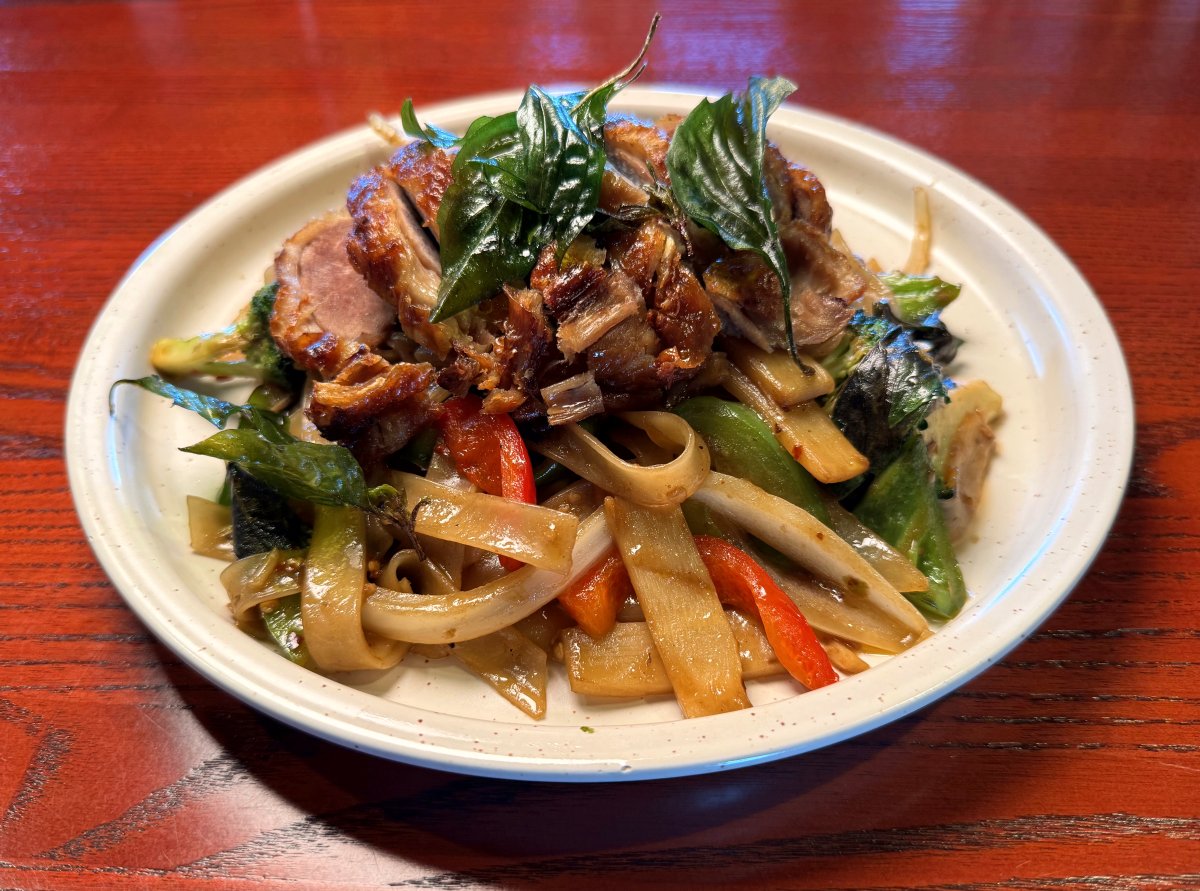
A thoughtful version feels different from the first bite. The noodles stay glossy and separate. The char from the wok gives the edges a slightly smoky flavor. The vegetables support the noodles instead of crowding them. Basil arrives at the last moment, so you catch that sweet, peppery perfume before the steam carries it off. Even if you ordered mild, the dish still tastes alive.
When people ask how to judge a Thai restaurant quickly, this is one of the first plates I mention. It is forgiving enough to appear on almost every menu, but demanding enough to expose shortcuts.
What separates a top Thai restaurant from a merely convenient one
If you are trying to decide where to order from, reviews often do not help much. Every place seems to be called “authentic,” “hidden gem,” or “best Thai in town.” Those words are cheap. Better clues come from details.
A restaurant with a strong noodle program usually handles volume without sacrificing texture. That matters because wide rice noodles are notoriously easy to overcook, especially during delivery rushes. Good kitchens know how much residual heat the noodles will carry. They leave just enough bite so the dish still eats well ten or fifteen minutes later.
Menus also reveal priorities. A place that offers customizable spice levels and clearly distinguishes dishes by flavor profile often understands its audience. Not everyone wants the same kind of heat. Some diners want a basil-forward plate with moderate chile. Others want the kitchen to push it toward real fire. A good restaurant can do both without turning everything into the same salty stir-fry.
Then there is consistency. Great Thai restaurants may have signature flair, but their drunken noodles should not swing wildly from one visit to the next. If one order is beautifully charred and the next is pale and wet, the kitchen has a process problem. Reliable food is not boring food. It is evidence of discipline.
Here are the signs I trust most when hunting for a new spot:
- Wide rice noodles are described clearly, not swapped vaguely with whatever noodle is available.
- Thai basil is listed or visible in customer photos, which often signals a more traditional build.
- Reviews mention wok char, spice balance, or texture, not just “huge portions.”
- The restaurant offers realistic protein choices and understands tofu as a serious option, not filler.
- Photos show vegetables with color and structure instead of a single dark, sauced mass.
None of those clues guarantees a perfect plate, but together they narrow the field fast.
The restaurants that usually rise to the top
Across cities, the strongest Thai restaurants for noodle lovers tend to fall into a few recognizable styles. The first is the compact neighborhood place with a focused menu and a high-output wok station. These are often the most dependable for drunken noodles because they make the dish constantly and know exactly how it behaves in takeout containers. If you have ever opened a box in the car because the basil aroma was impossible to ignore, you already know this type.
The second is the family-run restaurant where the menu balances familiar crowd-pleasers with regional dishes. In these places, drunken noodles often benefit from a kitchen that is not trying to blunt every flavor for the broadest possible audience. You are more likely to find sharper chile heat, more assertive basil, and a stronger hand with fish sauce and soy.
The third is the modern Thai restaurant with a polished room and a slightly higher price point. These can be excellent, especially if the kitchen respects wok-fired dishes instead of treating them like side players next to cocktails and design. At their best, these spots use better vegetables, cleaner proteins, and more controlled execution. At their worst, they sand down the dish until it looks pretty and tastes timid.
Then there are late-night Thai spots, the unsung heroes of noodle cravings. Drunken noodles were built for late hours. The dish holds up, satisfies fast, and welcomes a little extra spice when the rest of the city has shut down. Some of the best plates I have had came from kitchens working past normal dinner service, with cooks who knew exactly how to build a pan for someone who wanted flavor first and ceremony second.
How to search smarter when you want drunken noodles now
A search for Drunken Noodles Near Me tends to return a messy mix of sponsored listings, high-volume takeout places, and restaurants that happen to mention noodles somewhere on the menu. The trick is to search like a diner who knows the dish, not like an algorithm.
Start with customer photos before star ratings. Photos reveal more than polished menu descriptions. Look at the noodle width, sauce coverage, basil presence, and vegetable cut. If every image shows thin noodles, the restaurant may be substituting. If the dish looks dense and oily, you can expect a heavy finish.
Read reviews for specifics. A short review that says “great pad kee mao, noodles stayed chewy even after delivery” is worth far more than ten vague comments calling the food amazing. Mention of smoke, basil, spice, or texture usually means the reviewer paid attention.
Check whether the restaurant separates itself with regional detail. A menu that includes dishes beyond the usual pad thai and green curry often points to a kitchen with more range. That does not guarantee a better drunken noodle, but it often means the cooks have a stronger point of view.
Distance matters too. Drunken noodles travel better than some noodle soups, but they are not invincible. A restaurant twenty minutes away needs better execution than one five minutes away, because the steam in a sealed container will keep softening the noodles. If the dish already starts slightly overcooked, the drive will finish the job.
Delivery, takeout, and dine-in are not equal experiences
This is where practical judgment matters. The best drunken noodle in a dining room is not always the best one for delivery.
When you eat the dish fresh from the wok, you get volatile aromas that vanish quickly in transit. Basil is brighter. The edges of the noodles keep a little crispness. The vegetables retain more contrast. If a restaurant has a reputation for strong wok hei, that subtle smokiness is always more noticeable at the table than from a takeout carton twenty minutes later.
Takeout changes the target. A smart restaurant builds for the container. It may pull the noodles from the heat a touch earlier or moderate the sauce so the dish does not collapse into sogginess. Some kitchens excel at this. Others send out the same plate regardless of context, which means a good dine-in dish arrives tired at your door.
Delivery introduces one more variable, the driver’s timeline. A five-minute delay can make a real difference with wide noodles. If you are choosing between two similarly rated places and one is half the distance, that shorter route often wins.
For anyone serious about noodles, it is worth learning which local Thai restaurant does each format best. One place may be your dine-in favorite. Another may be your reliable weeknight takeout order. Those are not contradictory opinions. They are the result of paying attention.
Spice level is a real decision, not a dare
One of the most common mistakes people make with drunken noodles is ordering heat based https://miloqmya410.readspirex.com/posts/best-drunken-noodle-near-me-for-authentic-thai-dining-experiences-2 on ego. This dish should be spicy enough to wake up the sauce and basil, but not so punishing that every other flavor disappears. Restaurants also interpret spice levels differently. A medium at one spot may be a mild at another. A “Thai hot” at a restaurant that cooks primarily for a local Thai crowd can be a serious commitment.
If you are trying a new place, moderate caution pays off. Order one level below your usual heat if the restaurant has a reputation for strong chile use, especially if you are getting takeout. Heat often feels sharper in a closed container because the aromatic intensity concentrates.
At the same time, do not order it completely tame and expect the classic experience. Some of the dish’s character comes from chile in direct conversation with basil, garlic, and soy. Without that spark, you are left with a respectable stir-fry that never quite becomes drunken noodles.
Protein choices change the dish more than people think
Chicken is the default at many restaurants, and it works, especially if the kitchen slices it thin and cooks it quickly. Beef adds richness and stands up well to a darker, more intense sauce. Shrimp can be excellent, though it narrows the margin for error. Overcooked shrimp in a hot noodle dish becomes rubbery fast.
Tofu deserves more respect than it usually gets. At the right restaurant, tofu is not a consolation prize for vegetarians. It absorbs sauce beautifully and adds a soft contrast to the chew of the noodles. The issue is technique. If the tofu is not properly pressed or seared, it leaks water into the pan and weakens the whole dish.
Seafood combination versions can be satisfying, but they often work best at restaurants that move a lot of seafood and know how to keep each component distinct. Otherwise, they read like an upgrade button rather than an intentional composition.
This is one of those choices where the house style should guide you. If reviews rave about beef drunken noodles, there is usually a reason. Some kitchens simply build their sauce profile better around certain proteins.
When a restaurant deserves repeat business
A top Thai restaurant earns loyalty in small ways. Maybe the noodles remain springy even on a rainy delivery night. Maybe the basil is always fresh. Maybe the kitchen understands that “extra vegetables” should not mean diluting the sauce. Maybe the staff can tell you honestly whether the dish runs sweet, salty, or spicy before you order.
Those details matter because drunken noodles invite comparison. Once you have had a great version, average ones stand out immediately. You notice when the noodles are generic. You notice when the basil has been replaced with a few token leaves. You notice when the flavor relies too heavily on sugar. The best restaurants do not win because they are extravagant. They win because they know what to leave alone and what to push harder.
There is also a sense of rhythm in the best spots. Orders move fast, but the food does not feel rushed. The dish lands hot, fragrant, and coherent. It tastes like the cook knew exactly what they were aiming for.
A few practical ordering habits that improve the odds
If you care about getting the best possible plate, a few habits help more than most diners realize:
- Order during standard service hours when the main kitchen is fully staffed.
- For a first visit, choose a moderate spice level and a classic protein before customizing heavily.
- If you are driving more than fifteen minutes, crack the container slightly once you stop to let steam escape.
- Eat drunken noodles promptly, because wide rice noodles soften quickly as they sit.
- Reheat leftovers in a hot pan if possible, not the microwave, which often turns the noodles gummy.
These are small adjustments, but they can turn a decent order into a very good one.
What to expect from a truly memorable plate
A memorable Drunken Noodle does not have to be the spiciest or the biggest. In fact, oversized portions can be a warning sign when they come at the expense of texture and focus. The standout version is usually the one that feels composed all the way through. Every forkful carries sauce, basil, and heat. The noodles stay intact. The vegetables still contribute freshness. You keep eating because the flavor keeps evolving, not because the box is full.
There is usually one moment that tells you the restaurant knows the dish. It might be the slight char on the noodle edges. It might be the aroma of basil when the lid opens. It might be the way the sauce clings without pooling at the bottom. That moment is enough to separate a keeper from a place you only order from when everything else is closed.
For noodle lovers, that distinction matters. There are plenty of acceptable Thai restaurants. There are fewer restaurants that inspire a repeat craving for one specific plate. When you find one, save it, support it, and remember exactly how they build that dish.
The next time you search Drunken Noodles Near Me, do not settle for the nearest option with a decent star rating. Look for the restaurant that respects the noodles, knows its basil, and treats heat like a tool rather than a stunt. The best Thai restaurants for noodle lovers are not always the loudest or trendiest. They are the ones whose drunken noodles make you pause after the first bite and think, yes, this is the place.
Nakhon Luang Thai Kitchen
Address: 805 Village Center Dr, Colorado Springs, CO 80919
Phone number: +17195315175
FAQ About Drunken Noodles Near Me
What makes it drunken noodles?
Drunken noodles, or Pad Kee Mao, get their name from the Thai word khi mao (meaning "drunkard"). They contain no alcohol. The name comes from the idea that the dish is a popular late-night meal to cure a hangover or a great food to eat with a cold beer.
What is the difference between pad see ew and drunken noodles?
While both Pad See Ew and Drunken Noodles use the same wide rice noodles, Pad See Ew is a mild, sweet-savory dish made with dark soy sauce and Chinese broccoli, whereas Drunken Noodles (Pad Kee Mao) are fiery, garlicky, and herbaceous with fresh chilies and Thai basil.
What are traditional drunken noodles?
Traditional drunken noodles, known as Pad Kee Mao in Thai, are a fiery, savory street food stir-fry made with wide flat rice noodles, fresh garlic, lots of hot chilies, meat or tofu, and fragrant holy basil. Despite the name, they contain no alcohol; the dish is traditionally eaten late at night or as a hangover cure because the intense spice helps clear the head.